Gate Access Control in Spring Valley, NV
If your gate’s access system is failing — keypad not triggering the operator, remotes that stopped responding, an intercom that’s gone silent — Gerald Russell and our crew at All Star Gate Repair Las Vegas are ready to diagnose it the same day, right here in Spring Valley — call us for Gate Repair in Spring Valley. We’re familiar with the neighborhoods along West Flamingo Road, the HOA-managed subdivisions in the 89103 ZIP, and the specific failure patterns that hit this part of Clark County harder than most. Call us at (725) 356-1660 and we’ll get a technician out to you fast.
Why All Star Gate Repair Las Vegas Is Spring Valley’s Preferred Gate Access Control Company
Our Gate Access Control team has worked across Spring Valley’s master-planned subdivisions long enough to know exactly what makes access systems fail here — aging hardware, HOA approval layers, hard-water corrosion, and heat-stressed loop detectors. Gerald Russell doesn’t hand jobs off to subcontractors; he’s the owner and the lead technician, which means his reputation rides on every service call in Spring Valley.
That accountability shows up in our numbers. We’ve earned 189 verified reviews with a 4.9-star average over five years — sustained across jobs in communities exactly like the ones here in Spring Valley, where getting it right matters to HOA boards, property managers, and residents who depend on controlled gate entry every day. When you call us, you’re talking to the same crew that’s going to show up.
Spring Valley is a tight geographic zone and we know it well: Canyon Gate’s aging swing operators, the townhome clusters off West Flamingo Road, the subdivisions near Bruce Woodbury Beltway where post-foundation shifts from monsoon season create cascade failures that look like operator problems. We don’t guess. We diagnose.
Our Gate Access Control Services in Spring Valley
Keypad Entry
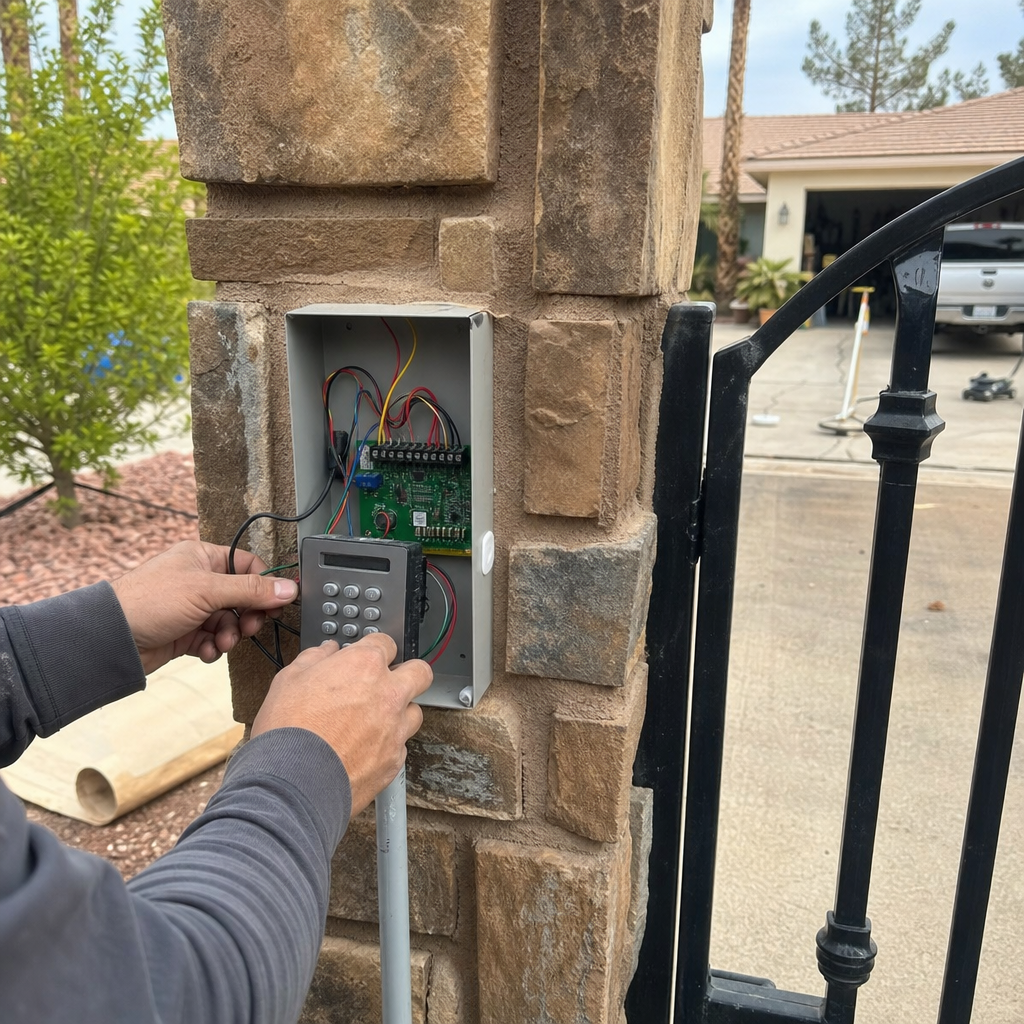
Keypad entry is the most common access point we service in Spring Valley, and it’s also one of the most commonly misdiagnosed. We regularly find that a keypad accepting a valid code and still not opening the gate isn’t a keypad problem at all — it’s a failed loop-detector wire or a circuit-board fault caused by Summer heat. In Spring Valley’s 89103 zone, Colorado River hard water leaves mineral scale on low-voltage keypad terminals within a few seasons, corroding the contacts that communicate between the reader and the operator until the system stops authenticating entirely. We clean, re-terminate, or replace the hardware depending on severity, and we coordinate with HOA property managers on any hardware swap that requires written approval before work begins.
Rolling-Code Remote Control
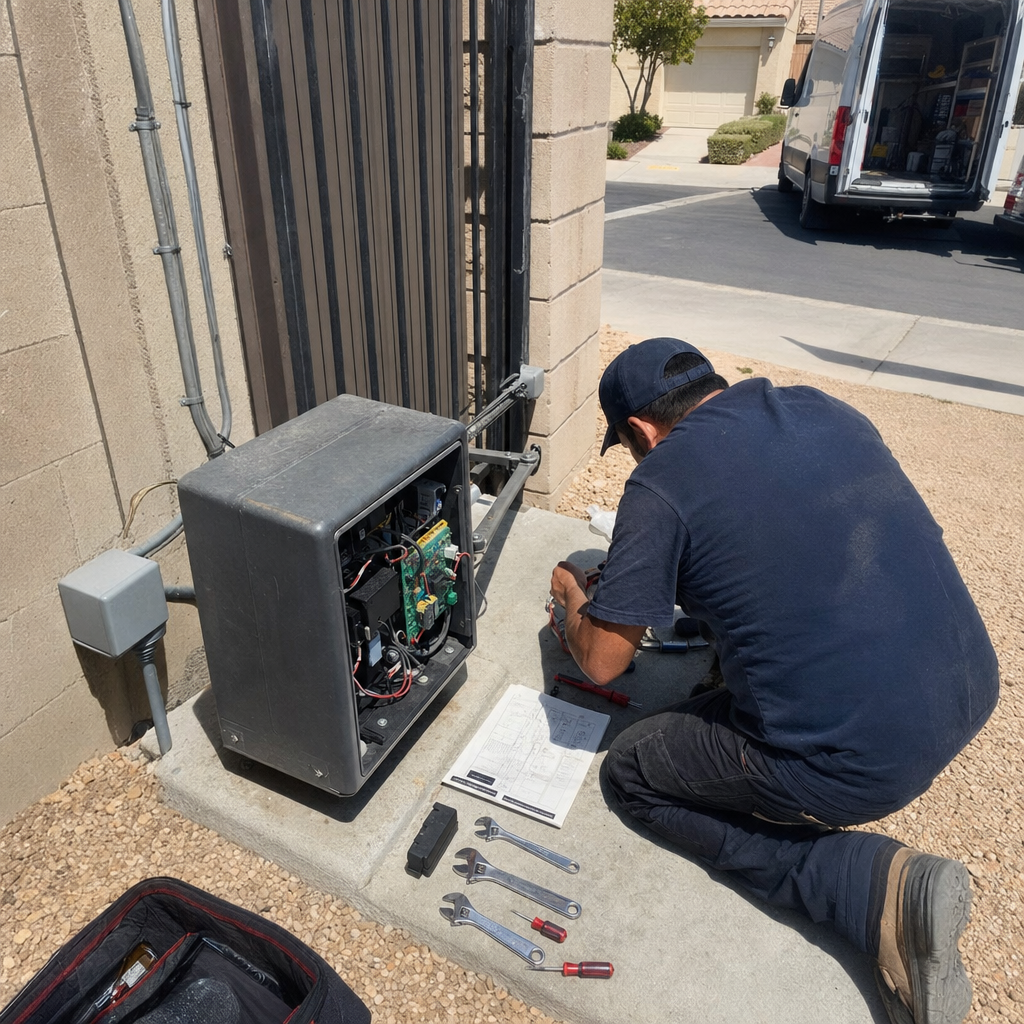
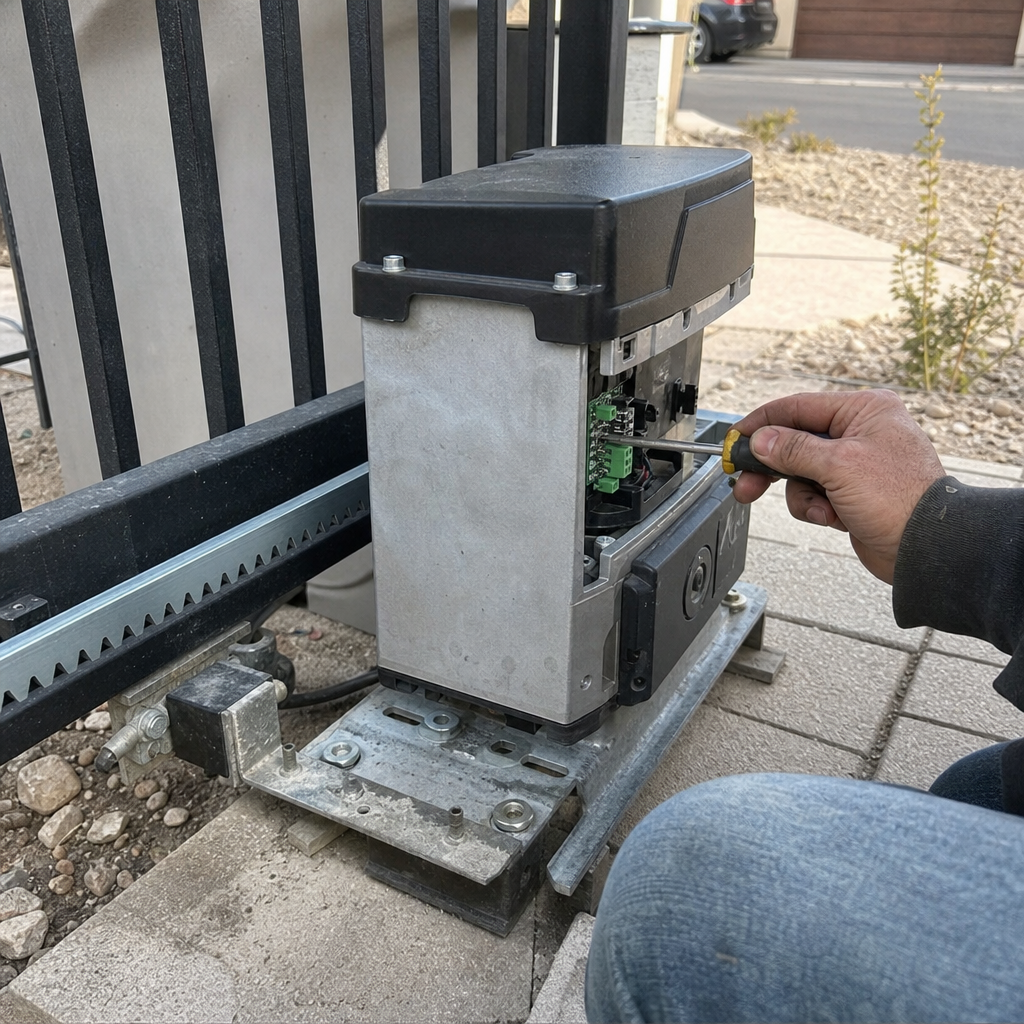
The LiftMaster, Viking, and Linear operators installed during Spring Valley’s 1988–2000 gated-community build-out are now carrying remotes that are 25–35 years old — and the rolling-code receivers on those units fail in ways the original manufacturers didn’t anticipate under Las Vegas Valley heat. When a remote stops responding in Spring Valley, the first thing we check isn’t the battery; it’s whether the receiver board has dropped its stored codes after a heat event, or whether the antenna lead has UV-degraded to the point it can no longer hold signal range — common issues our Gate Motor & Opener — Spring Valley techs see every summer. We reprogram, re-flash, or replace receivers on all nine brands we cover — LiftMaster, FAAC, BFT, Linear, Viking, Ghost Controls, DoorKing, Elite, and Mighty Mule — without requiring you to change your gate operator just to get working remotes again.
Phone Entry Systems
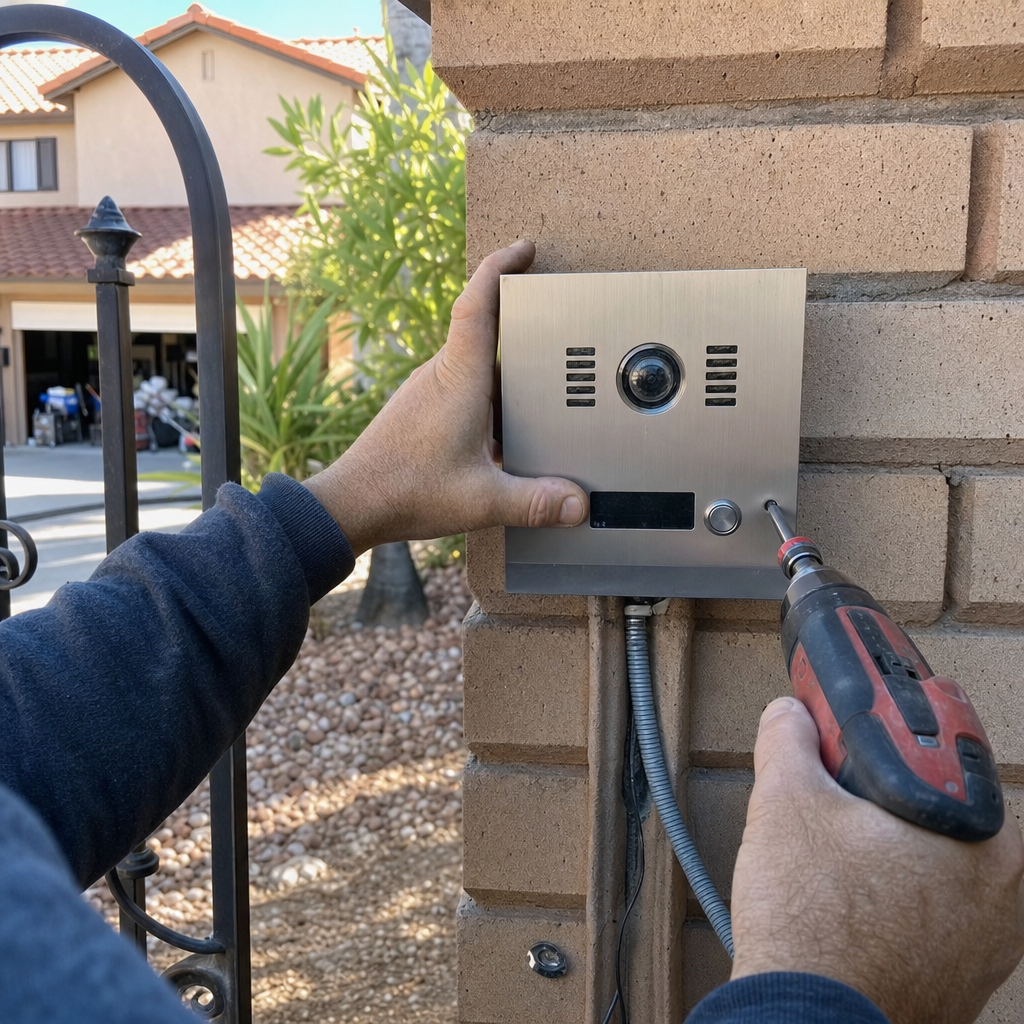
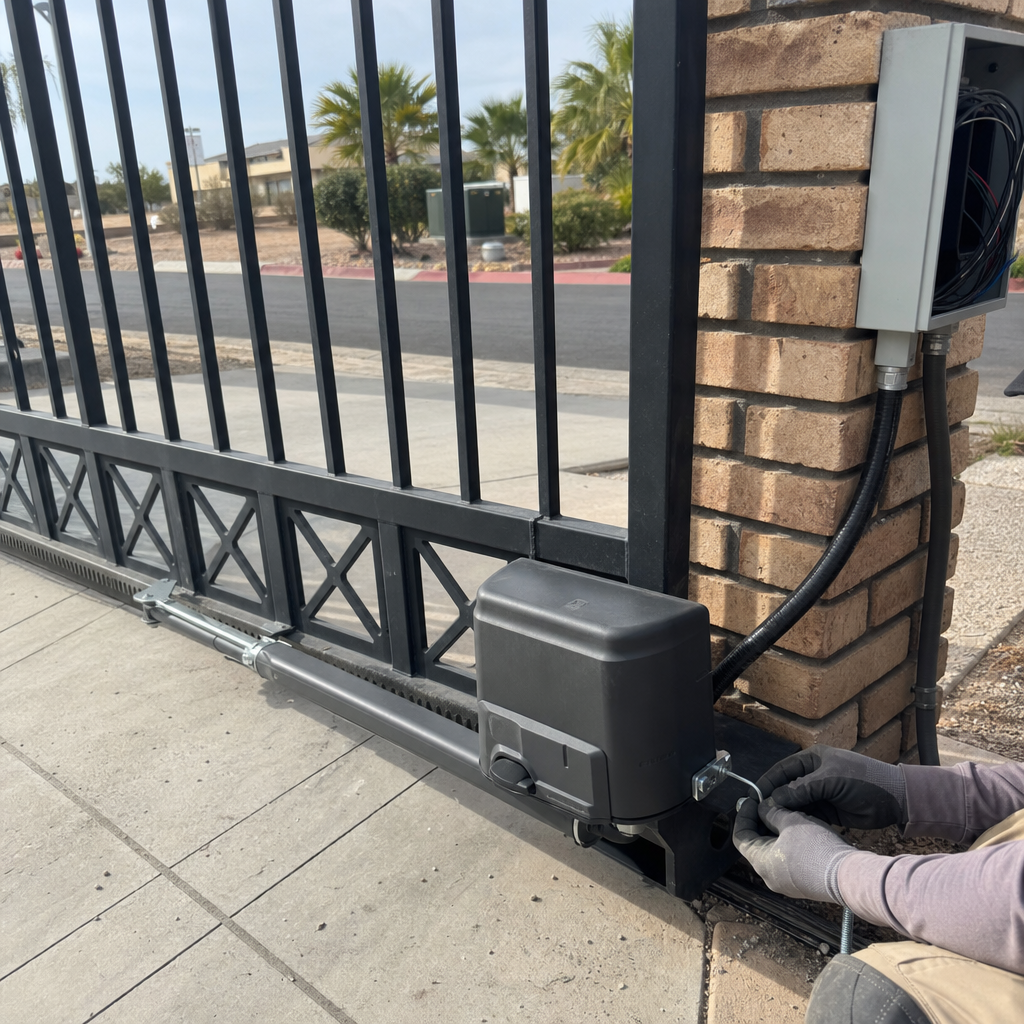
Phone entry systems are increasingly common in Spring Valley’s commercial corridors near West Sahara Avenue and East Charleston Boulevard, and in the higher-density townhome communities that need visitor access without a staffed gate attendant. We install and service DoorKing and LiftMaster phone-entry pedestals, including cellular-based units that don’t rely on a landline — a practical upgrade in communities where the original telephone entry hardware has reached end-of-life. If your HOA is evaluating a phone-entry upgrade, Gerald can walk the property manager through the options before any work is quoted.
Card Reader Access
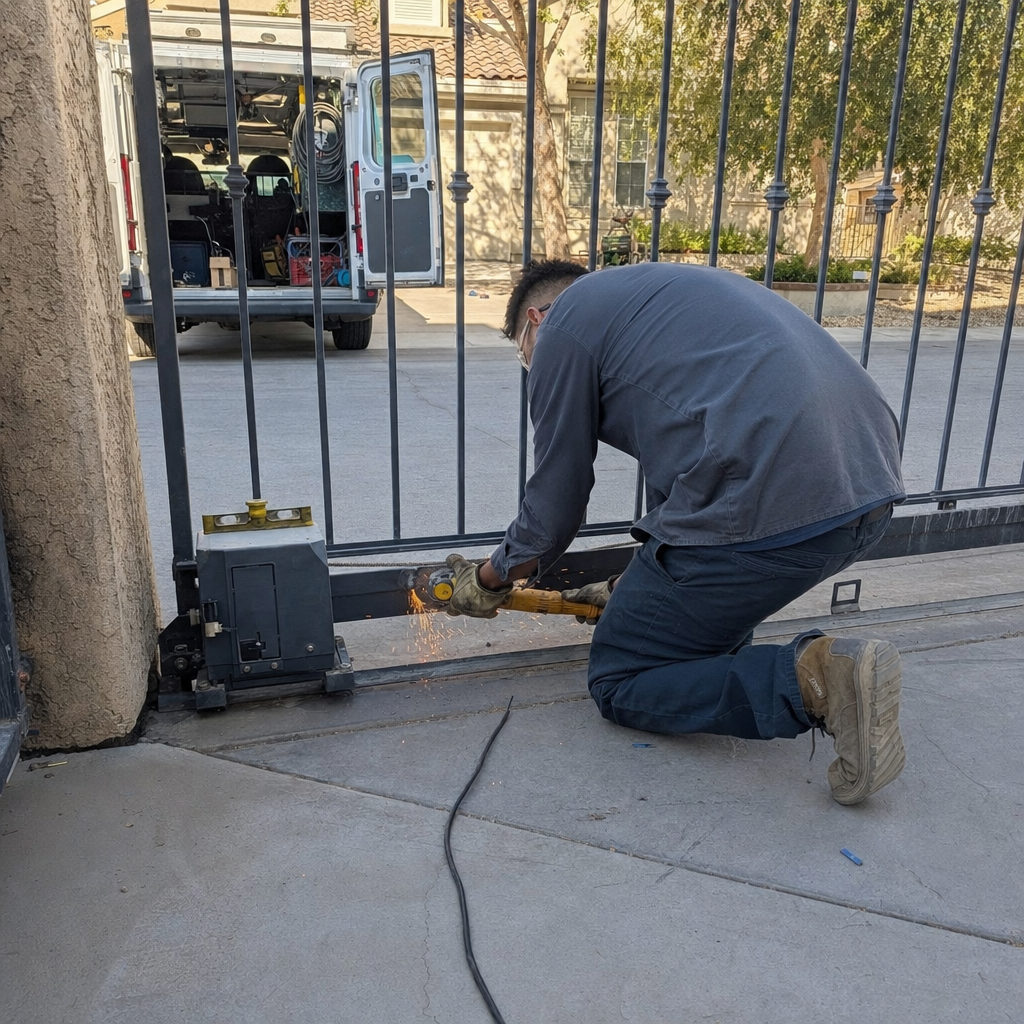
Proximity card readers and fob-based systems are common in Spring Valley’s commercial properties and multi-family communities, and the most frequent failure we see is corroded low-voltage wiring between the reader and the gate controller — exactly the kind of damage accelerated by hard-water mineral deposits and intense UV exposure on outdoor conduit runs. We service and replace card reader systems on all major platforms, re-enroll credentials, and test every card in the system before we leave the property. A typical card reader service call in Spring Valley runs $95–$185 depending on whether it’s a wiring repair, a reader replacement, or a full credential re-enrollment.
What happens when you call
- 1
A real person answersNo phone trees — you reach a local pro.
- 2
You get an upfront price rangeHonest numbers before anyone is dispatched.
- 3
A background-checked tech heads outLicensed & insured, dispatched right away.
- 4
You approve before work beginsNothing starts until you say go.
Trusted Brands We Service in Spring Valley
We work on every major gate brand operating in Spring Valley’s residential and commercial properties: LiftMaster, FAAC, BFT, Linear, Viking, Ghost Controls, DoorKing, Elite, and Mighty Mule. That matters here because the aging Canyon Gate and similar subdivision operators are overwhelmingly LiftMaster, Viking, and Linear — brands that require specific circuit boards and receiver modules we stock for fast turnaround. We don’t order parts after we diagnose; we carry common replacement hardware in the truck so Spring Valley customers aren’t waiting a week for a part that should have been a same-day fix.
Common Gate Access Control Problems We See in Spring Valley Homes
- Heat-induced circuit-board credential wipe: Original LiftMaster and Linear access-control panels from the Canyon Gate-era build-out overheat when asphalt surface temps exceed 160°F in Summer, causing the board to drop all stored codes and lock out residents without warning. This is a hardware failure, not a programming error — and replacing the board without addressing ventilation or mounting position means it fails again the following July.
- Hard-water corrosion on keypad and card-reader contacts: Spring Valley’s Colorado River water supply is among the hardest in the US. Mineral scale builds up on keypad terminal screws and card-reader contacts until the low-voltage signal from the reader can no longer reach the operator controller — the system appears to be accepting input while failing silently at the connection point.
- UV-degraded loop-detector wire insulation: Rubber insulation on underground loop-detector wires in Spring Valley’s 89103 zone typically shows cracking and brittleness within five to eight years under the combination of 160°F-plus asphalt surface temps and intense UV radiation. A cracked loop wire sends false-presence signals that convince the operator board a vehicle is in the gate path — locking out remote and keypad commands even when the entry is clear.
- Caliche post-heave misdiagnosed as an operator fault: Gate posts in Spring Valley’s caliche-laden desert subsoil can sit perfectly stable for years, then shift subtly during July–September monsoon season when moisture temporarily softens the hardpan beneath the surface. The resulting gate misalignment triggers safety-reverse loops and kills remote response — symptoms that look exactly like an operator or receiver fault until you measure the post for vertical drift. We check the post before we replace electronics.
The Spring Valley Access-Control Replacement Wave — What’s Happening Right Now
Spring Valley sits at the center of Clark County’s late-1980s through 1990s gated-community construction boom. Canyon Gate is the most visible example, but dozens of surrounding subdivisions in the 89103 ZIP followed the same development timeline — meaning the LiftMaster, Viking, and Linear access-control operators installed at those gates are now 25 to 35 years old and failing simultaneously. This is a concentrated Spring Valley Gate Installation and replacement wave specific to Spring Valley’s development history. It hasn’t hit newer suburbs to the southwest, where HOA gates were built in the 2005–2015 era, and it doesn’t apply to the older urban core closer to Downtown Las Vegas, where the housing stock predates the mass-gated-community model entirely.
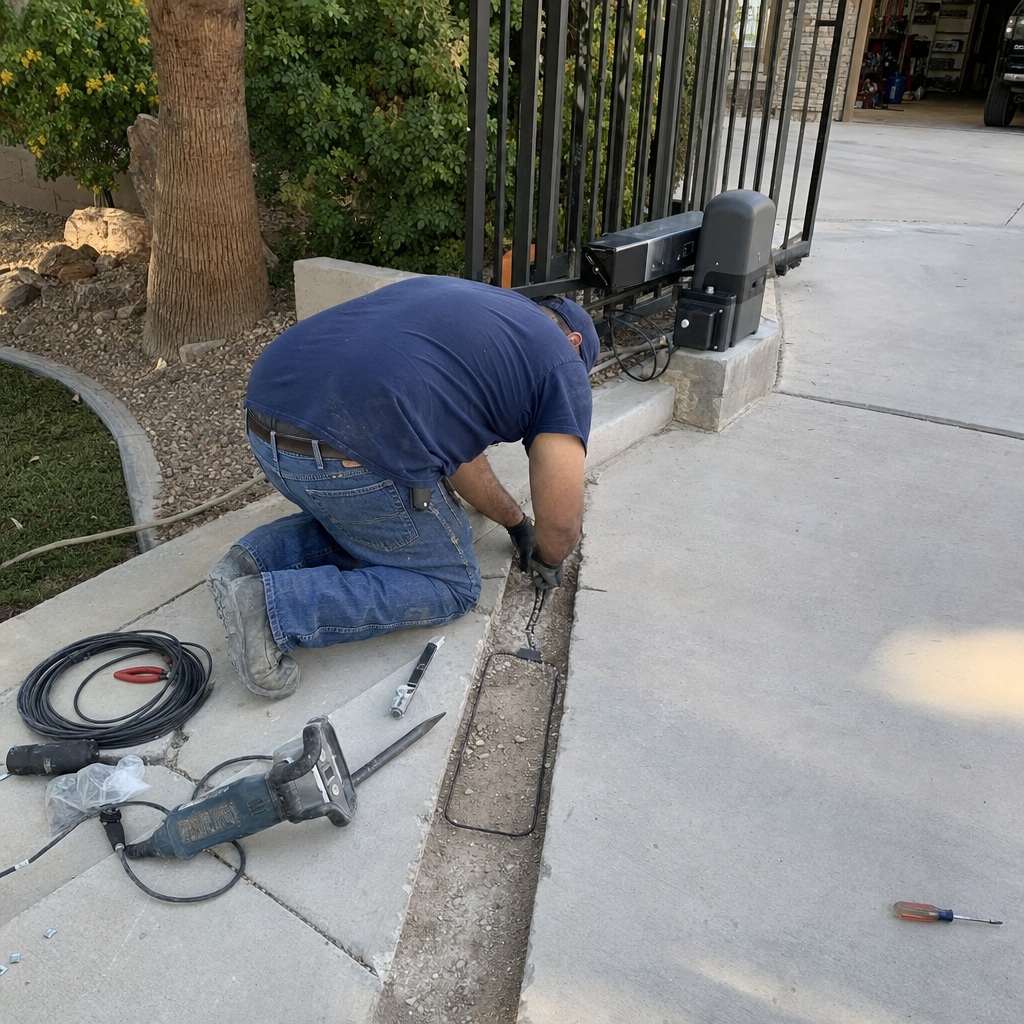
What that means practically: if you’re in a Spring Valley HOA subdivision and your access system is failing, you’re likely not dealing with a one-off malfunction. You’re dealing with hardware that has reached the end of a service life that Las Vegas Valley summer heat compresses significantly below rated specifications. Our crew was called to a Canyon Gate townhome cluster off West Flamingo Road where residents reported the keypad entry unit — a DoorKing pedestal model — was accepting codes but refusing to trigger the swing operator. Our tech traced the fault to a UV-degraded loop-detector wire whose rubber insulation had cracked under 160°F-plus asphalt surface temps, sending false-presence signals that locked out the board. We replaced the loop wire, re-flashed the DoorKing controller with updated rolling-code firmware, and reprogrammed all resident remotes before the HOA property manager’s end-of-day deadline — restoring full access-controlled entry the same afternoon. That’s the kind of layered diagnosis this ZIP code requires.
Repairs here almost always involve coordinating with HOA property managers before any hardware is touched. Spring Valley’s dominant housing stock — stucco-and-tile tract homes and master-planned subdivisions built roughly 1985–2005 — is overwhelmingly HOA-governed, and most governing documents require written manager approval before any gate hardware is swapped. Gerald and our team are used to that process. We provide documentation, scope descriptions, and can be on a call with a property manager if it speeds up the approval. That bureaucratic layer doesn’t exist in non-HOA neighborhoods, but in Spring Valley it’s simply part of the job.
Pricing for Gate Access Control in Spring Valley, NV
Access-control work in Spring Valley’s market runs across a fairly consistent range depending on what’s actually failing. Here’s what you can expect:
- Keypad entry repair or replacement: $120–$290
- Rolling-code remote reprogramming or receiver replacement: $85–$210
- Loop-detector wire replacement: $150–$320 (includes re-flash of operator board where required)
- Phone entry system installation: $380–$750 depending on unit type and conduit run
- Video intercom retrofit (existing gate, no operator change): $420–$900
- Card reader service or replacement: $95–$185
- Full access-control system replacement (aging LiftMaster/Viking/Linear era hardware): $600–$1,800 depending on gate configuration and HOA hardware requirements
What moves a job toward the higher end: HOA-specified replacement hardware that limits brand options, additional conduit work in caliche subsoil, or circuit boards that require full credential migration from failed memory. Every estimate is free. Call (725) 356-1660 and Gerald’s team will give you a clear number before any work starts.
We Also Serve Cities Near Spring Valley
Our service area covers the full Las Vegas Valley, and Spring Valley’s neighboring communities are well within our regular route. If you’re in Summerlin South — just northwest along the Bruce Woodbury Beltway corridor — we service gate access systems there with the same same-day availability and HOA coordination process we use throughout Spring Valley. One call covers both areas.
Serving Spring Valley, NV — Our Local Coverage Area
We’re based in the Spring Valley area and know this community well. Use the map below to see our service coverage — if you’re nearby, we can almost certainly help.
FAQs — Gate Access Control in Spring Valley
Yes, and we do it regularly in Spring Valley. Gerald and our team will provide the HOA property manager with a written scope of work, the specific replacement hardware model, and any documentation the board requires before we touch the gate. We’re used to working against HOA approval windows — it’s a standard part of every access-control job in the 89103 zone. Call us at (725) 356-1660 and we can start the documentation process the same day we do the initial assessment.
A keypad that accepts codes but fails to trigger the operator is almost always a communication fault between the reader and the controller — not a keypad issue. In Spring Valley, the two most common causes are a UV-degraded loop-detector wire sending a false-presence signal that locks the board, and mineral-scaled low-voltage terminals on the controller connection that are blocking the authentication signal. Both are diagnosable on the first visit. Call (725) 356-1660 for a same-day assessment.
On well-maintained Linear and Viking systems, rolling-code remotes hold their programming indefinitely — the remote itself rarely loses sync. What causes mass remote failure in Spring Valley’s older Canyon Gate-era units is the receiver board overheating in summer and dropping its entire code library. When that happens, every remote in the community stops working simultaneously. That’s a board failure, not a remote problem, and reprogramming without replacing the board just sets you up for the same failure next July. We’ll tell you which situation you’re in before we quote any work.
Yes, in most Spring Valley configurations a video intercom can be added without replacing the gate operator. We run new low-voltage wiring from the intercom station to the operator controller, mount the camera unit at the entry pedestal, and integrate it with a smartphone app or interior panel depending on what the HOA will approve. A retrofit intercom in Spring Valley typically runs $420–$900. Call (725) 356-1660 for a free on-site quote.
In Spring Valley, that exact combination — misalignment plus remote dropout — is a strong indicator of caliche post-heave, not operator failure. When July–September monsoon moisture softens the hardpan beneath a gate post, the post shifts subtly and the gate leaf drifts out of its travel path. The misalignment triggers the operator’s safety-reverse loop, which kills remote response as a protective function. The operator is doing its job correctly; the post has moved. Replacing the operator solves nothing. We check post vertical alignment before we look at electronics — and if the post needs to be re-set below the caliche layer in concrete, we handle that in-house without a subcontractor.
Reviewed by Gerald Russell, Owner at All Star Gate Repair Las Vegas, serving Spring Valley since 2019.